
Completing rehab is a major accomplishment — but for many people, staying sober after rehab is the hardest part. The structure, accountability, and support that made treatment possible disappear the moment you walk out the door. And the same triggers, relationships, and environments that surrounded your addiction are still waiting.
Relapse prevention is not about willpower. It is about building the right systems, habits, and support structures before you need them — so that when the hard moments come, you already have a plan.
Why the Period After Rehab Is So Vulnerable
Research consistently shows that relapse risk is highest in the first 90 days after leaving treatment. During this window, the brain is still healing, old neural pathways are still strong, and the coping skills learned in treatment have not yet become automatic habits.
At the same time, the person returning from rehab is often expected to immediately re-engage with work, family, finances, and relationships — all of which may have been damaged by addiction. That is an enormous amount of pressure at exactly the wrong time.
This is why the transition from treatment to everyday life is one of the most critical moments in recovery — and why having a structured relapse prevention plan in place before you leave treatment is so important.
What Relapse Prevention Actually Looks Like
Effective relapse prevention is not a list of things to avoid. It is a proactive plan for how to live. It includes:
1. Identifying your personal triggers
Triggers are the people, places, emotions, situations, and physical states that increase your craving or vulnerability. Common triggers include stress, loneliness, boredom, conflict, certain social environments, specific people, and physical discomfort. Knowing your triggers in advance allows you to plan for them rather than react to them.
2. Building daily structure
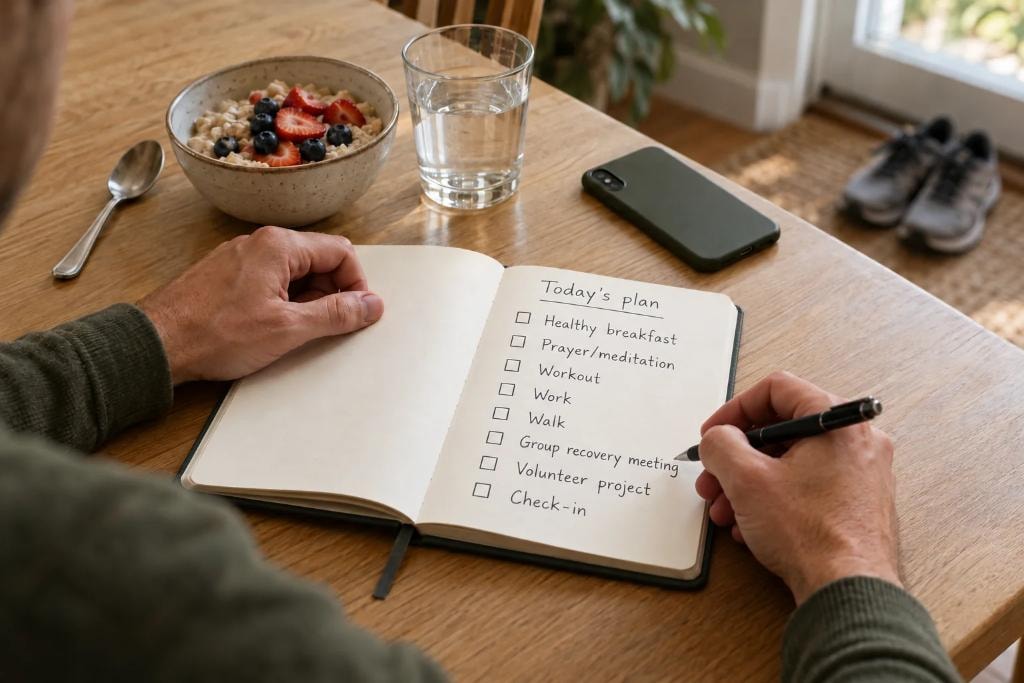
Unstructured time is one of the biggest relapse risks in early recovery. A daily schedule that includes sleep, exercise, meals, work or purposeful activity, recovery meetings or coaching, and social connection creates the framework that keeps recovery stable. Structure is not a cage — it is a foundation.
3. Establishing accountability
Accountability is one of the most powerful relapse prevention tools available. Whether that comes from a sober coach, a sponsor, a recovery coach, or a trusted family member, having someone who knows your plan and checks in regularly dramatically reduces the risk of relapse. Isolation is the enemy of recovery.
4. Creating a crisis plan
A crisis plan is a written, specific plan for what you will do when a craving hits, when a high-risk situation arises, or when you feel like you are about to relapse. It includes who you will call, where you will go, and what actions you will take. Having this plan in place before a crisis means you do not have to think clearly in the moment — you just follow the plan.
5. Addressing physical health
Exercise, nutrition, sleep, and physical health are not optional extras in recovery — they are foundational. Physical health directly affects mood, energy, stress tolerance, and craving intensity. A recovery plan that ignores the body is incomplete.
6. Building a sober community
Isolation is dangerous. Connection is protective. Building relationships with people who support your sobriety — whether through recovery meetings, faith communities, fitness groups, or coaching — creates the social foundation that makes long-term recovery possible.
The Role of a Sober Coach in Relapse Prevention
A sober coach is one of the most effective relapse prevention tools available for people in early recovery. Unlike therapy, which focuses on the past, sober coaching focuses on the present and future — on building the habits, routines, and accountability structures that make sobriety sustainable.
A sober coach helps you identify triggers, build daily structure, navigate high-risk situations, set and achieve goals, and stay accountable to your recovery plan. They are available when you need them, not just during a scheduled appointment.
The Role of a Sober Companion in High-Risk Transitions
For people leaving treatment and returning to a high-risk environment — or for people with a history of repeated relapse — a sober companion provides intensive, hands-on support during the most vulnerable window. A sober companion may live in the home, travel with the client, and provide 24/7 accountability during the critical early weeks of post-treatment recovery.
Warning Signs That Relapse May Be Coming
Relapse rarely happens without warning. Common warning signs include:
- Romanticizing past use or minimizing the consequences of addiction
- Isolating from support systems and recovery community
- Skipping meetings, coaching sessions, or other accountability structures
- Increasing stress without healthy coping strategies
- Reconnecting with people, places, or situations associated with past use
- Telling yourself "I can handle it now" or "just one time"
- Neglecting sleep, exercise, nutrition, or self-care
- Feeling hopeless, overwhelmed, or like recovery is not worth the effort
Recognizing these warning signs early — and reaching out for support immediately — is the difference between a close call and a full relapse.

If Relapse Happens
Relapse is not the end of recovery. But it should be treated as a serious signal that the current plan is not working — not as confirmation that sobriety is impossible. If relapse occurs, the most important thing is to get back on track immediately, not to wait until things get worse.
That may mean reaching out to a sober coach, calling a sponsor, contacting a treatment center, or arranging for a sober companion to provide intensive support during the re-stabilization period. The goal is to minimize the damage and rebuild momentum as quickly as possible.
How Sober Coaching Can Help
At Sober Coaching, we specialize in the transition from treatment to real life. Whether you need a sober coach for ongoing accountability, a sober companion for intensive early support, or online recovery coaching for flexible long-term guidance, we build recovery plans that fit your life — not a generic template.
Call us at 877-223-6680 for a confidential consultation. Or contact us online. We are available 24/7.